GENERAL   EQUIPMENT   INC.                    


8770 Sunset Drive #191 Miami FL 33173 · USA                                  

Tel: +1 305 468 4650 +33 6 68 96 24 99 · Fax: +1 360 937 2965 +33 8 21 46 30 77                                                  
Email:
info@generalequipment.infowww.generalequipment.info                                                       


SAXON


TYPE:

APC

DESCRIPTION:

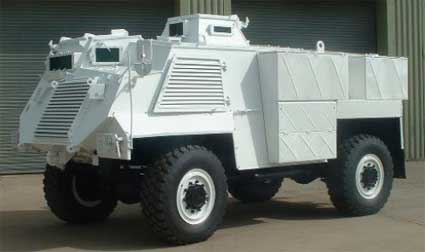
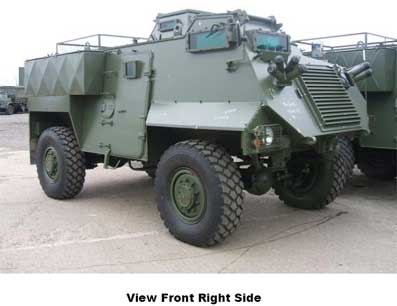
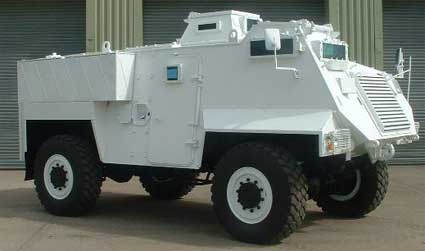
Armored Personnel Carrier Saxon AT105

PRICE:

Upon Request

PACKING:

Ex-Works


armored personnal carrier saxon at105


Examples of Saxons converted for U.N. peacekeeping role


The AT105 was developed by GKN Defence as the successor to its earlier AT104.

The first prototype of the AT105 was completed in 1975 and the first production vehicles in 1976.

Main improvements over the original AT104 can be summarised as: the armoured hull has been designed to give the same degree of protection to the radiator, engine and transmission as to the crew; redesigned hull floor to give increased protection against damage from mines; more powerful engine and a shorter wheelbase for improved mobility and turning.

In mid 1982 the AT105 was named the Saxon.

Early in 1983 the British Ministry of Defence placed an order GKN Defence for an initial 47 Saxon APCs for the British Army, with first deliveries made in early 1984.

The second order for the British Army comprised 247 vehicles, deliveries of which have now been completed. Late in 1985 the British Army exercised its option for a further 200 Saxons which were all completed by early 1989.

The Royal Artillery has ordered  30 Saxons for use as command post vehicle with Rapier surface-toair missile units and final deliveries of this version were made in early 1987.

There was also a requirement for 500 Saxons to equip Territorial Army units earmarked for the British Army of the Rhine, but as of early 1990 no additional orders for these vehicles had beenplaced.

Each British Army Saxon carries a fully equipped rifle section of 10 and is being issued to 11 Type A UK-based infantry battalions that will reinforce BAOR in time of war.

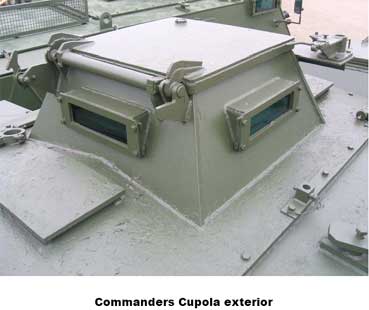
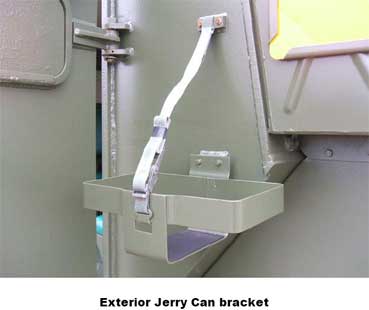
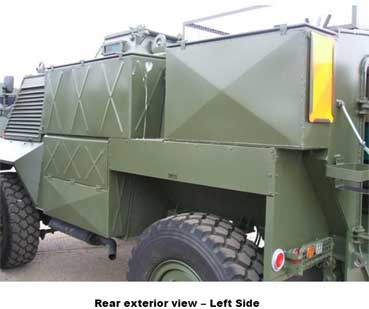
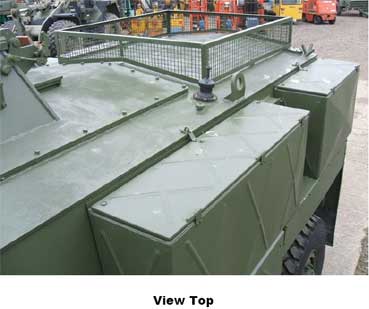
The British Army Saxons have a fixed observation cupola for the commander, with a socket in each corner of the cupola for a 7.62mm GPMG DISA mount. British Army vehicles have no door in the left side of the hull, a stowage rack on the roof and external fully enclosed bins.

Two variants have been supplied to the British Army, command and recovery.

The latter has a side-mounted five-tonne hydraulic winch that can be used to the front or rear and is driven from a PTO from the gearbox.

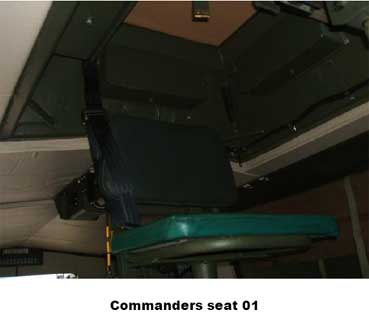
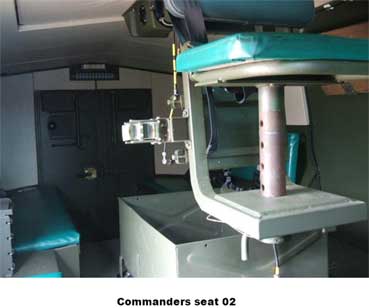
There are interior seats for a crew of four in addition to stowage for recovery equipment.

By March 1984 the first group of the British Army’s Saxon APCs had successfully completed the first familiarisation course at the Infantry Trials and Development Unit, School of Infantry, Warminster, and first deliveries had been made to the 1st Battalion The King’s Own Border Regiment for operational training.

Following successful user trials by the British Army, the vehicle is now being considered for a number of additional roles including command vehicles, ambulance, infantry support weapons carriers and for specialist Air Force requirements.

In 1988 the Hong Kong Police Force took delivery of seven Saxon vehicles for use by the Police Tactical Unit and these replaced older Saracen vehicles.

Of the seven vehicles, two are command post vehicles and the remaining five are personnel carriers carrying 10 men plus commander and driver.

By early 1989 the British Army had taken delivery of 524 production Saxon (4 x 4) APCs and variants with a further quantity of vehicles required in the future as command post vehicles for use with the Shorts Starstreak High Velocity Missile System.

GKN Defence are offering Saxon to meet part of the British Army’s requirement for a Future Family of Light Armoured Vehicles (FFLAV). Description (Right-hand drive model; left-hand drive also available)

The basic model has a hull of all-welded steel with the driver seated at the very front of the hull on the right side and the personnel compartment at the rear.

The hull provides the crew with complete protection against small arms fire up to and including 7.62mm armour piercing rounds, and HE shell fragments up to 155mm when burst at 10m from the vehicle.

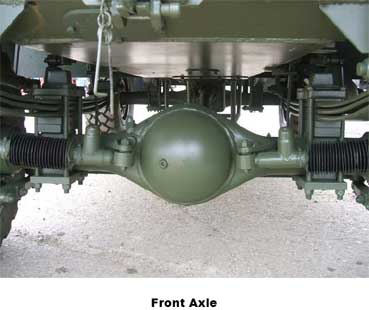
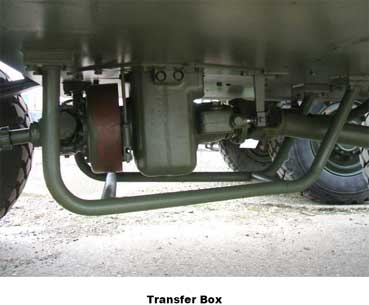
The floor is V-shaped to give maximum protection against mine blast, except for the axles, which are outside the armoured section.

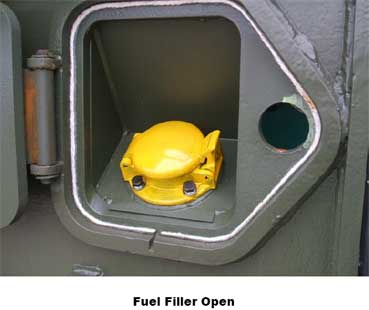
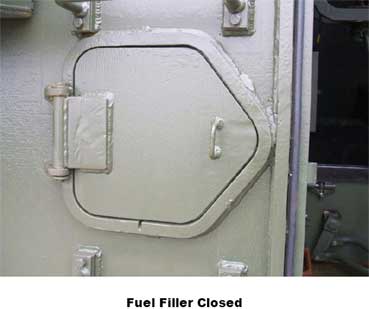
The engine, transmission, fuel, batteries, as well as the vacuum servos and hydraulics are all contained within the armoured compartment.

The engine, transmission and other automotive components are standard commercial items.

British Army vehicles have a high degree of commonality in engine and axle components with other in-service vehicles.

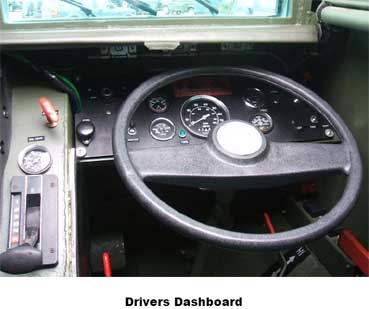
The driver can reach his seat either from inside the vehicle or by forward-opening hatch cover over his position.

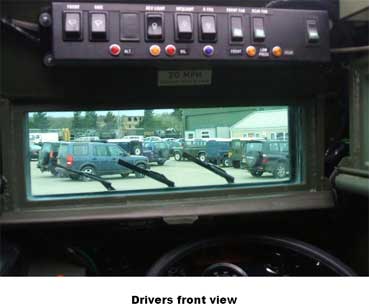
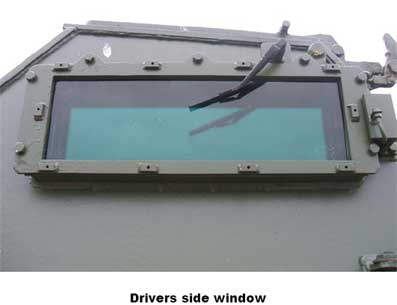
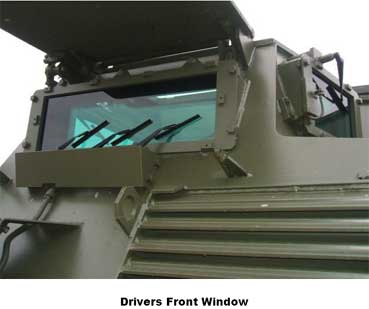
There are bulletproof windscreens in front and on both sides.

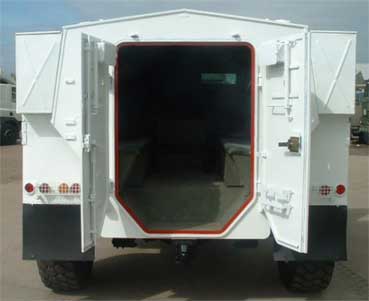
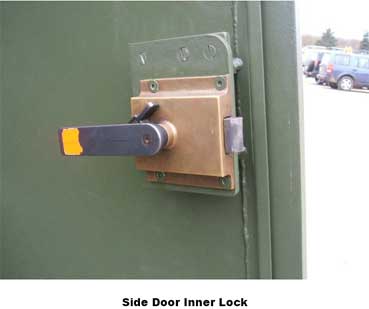
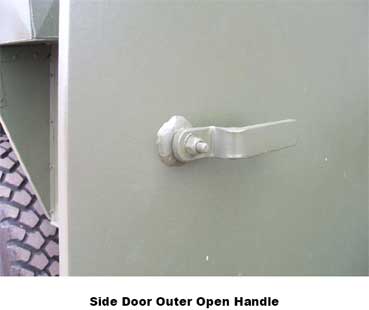
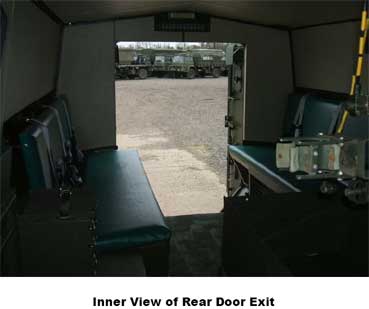
The personnel sit four down each side of the hull on padded bench seats which are usually equipped with seat belts, and enter and leave the vehicle by two doors in the rear of the hull and single door in each side of the hull.

The British Army specification has minor differences from other in-service vehicles and these include exterior stowage bins and no left hand door.

Each of the doors has a firing port and a vision block.

There are additional firing ports in each side of the hull and a single firing port in the forward part of the hull on the left side.

Specially designed ball mounts have also been developed which can be installed in the firing ports to allow the crew to fire their weapons from inside the vehicle in safety.

The interior of the hull is lined with 26mm thick thermal insulation and a forced air circulation system is fitted as standard on all vehicles.

The commander’s cupola has four sides each with a vision block, and a single piece hatch cover that opens forwards.

A 7.62mm machine gun can be pintle-mounted at this position if required.

The commander’s cupola is welded to an oblong sheet of armour which in turn is bolted to the roof of the vehicle.

This allows the command module to be removed and replaced by another module with a different armament installation.

When the engine need replacement the roof module is removed first and the complete engine and transmission can be lifted through the roof.

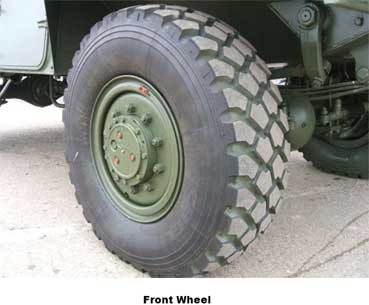
Run-flat cross-country tyres are fitted as standard and in a ‘shot through’ condition the vehicle can travel 96km at 48km/h.

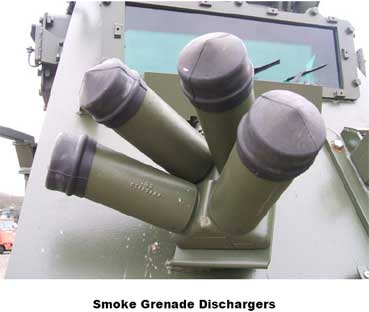
Optional equipment for the Saxon includes air-conditioning systems, auxiliary power unit, barricade remover, door safety mechanism, grenade launchers, hand-operated searchlight, heater, rotating/flashing beacons and siren, loud speakers and a frontmounted winch.


Specification and photos are not contractual and are subject to verification upon inspection


TAKE NOTICE!


PLEASE BE ADVISED THAT INFORMATION INCLUDED IS CONFIDENTIAL IN NATURE AND IS BASED ON PRE-EXISTING BUSINESS RELATIONSHIP WITH THE LEGAL OWNER OF PROPERTY DESCRIBED HEREIN (IF APPLICABLE). AS SUCH, UPON RECEIPT OF SAID INFORMATION THE RECEIVER ACKNOWLEDGES THAT ANY UNAUTHORIZED CONTACT WITH SAID LEGAL SELLER WILL BE CHARACTERIZED AS A BREACH OF CONFIDENTIALITY AND SAID AGREEMENT MAY BE ENFORCED UNDER EXISTING LAW OR IN EQUITY.


This paper was prepared by General Equipment Corp.
The paper represents an offer of a partner of General Equipment Corp.
All rights are reserved by and for General Equipment Corp..
All content and ideas of this paper are the property of General Equipment Corp.


Defense items are subject to final destination approval and granting of an

export license issued by exporting country's authorities