|
|
GENERAL EQUIPMENT INC.
8724 Sunset Drive #191● Miami FL 33173 · USA
|
|
|
GENERAL EQUIPMENT INC.
8724 Sunset Drive #191● Miami FL 33173 · USA
|
GSM INTERCEPTOR
|
TYPE: |
Interceptor |
|
DESCRIPTION: |
GSM Interceptor |
|
PRICE: |
Upon Request |
|
PACKING: |
Ex-Works |
GSM INTERCEPTOR
GSM INTERCEPTOR 5.1

GSM Interception System
|
Real time
interception of GSM traffic Supports both A5.1 and A5.2 deciphering Totally transparent and undetectable by the Mobile Operator and the subscriber Support for all frequency bands Gathering intelligence information even when target is not using the mobile phone User-friendly operation The system is designed for off-air interception for cellular communication in GSM networks. It provides the interception of 4/6/8 ( or more) simultaneously subscribers that are operating close to the system. The system intercepts and records all outgoing and incoming calls, voice and SMS, to and from the target.The system is using an active system that captures the IMSI and IMEI of the targets but as it is an active system it is proved fully non detectable modes of operation.The system operates in Random mode as well as in Target mode. It can filter, track and record only the target operation.Advantages: Totally undetectable by the operator and by the user Intercepts and records all outgoing and incoming calls, voice and SMS All target calls are registered in the Mobile Operator billing systems Pass the caller ID to the target mobile phone. All traffic (voice and data) is fully encrypted in the air. Multi Mobile Operators functionality Easy change of Mobile Operator by changing a parameter only Interception distance up to 1Km, Interception operation starts in less than 15 seconds Correlation tools to detect targets Analysis tools to search for events VPN configuration allows operation in different locations and common control center. Operate with GSM DF system – remote silent activation of a target
Options and extra features: Optional model up to 2Km. Optional- interception of 3G cell phones. Optional- target Direction Finder – DF subsystem Optional – target Direction Finder – Homing system Optional- Dominator V - Split operation: controlling remote interception points via wireless communication Remote operation – controlling of interception mission via Internet Target communication manipulation . Block, redirect or change information to or from the target. Change SMS content, Voice call manipulation
Overview The System Purpose Detecting GSM-standard mobile stations, located within the zone controlled by the System, Registering traffic (incoming and outgoing communications) from these mobile stations, Manipulating the state of mobile stations, which have been registered by the system.
Defining mobile station key parameters - IMSI, IMEI, Kc, etc, which are required for System operation; Full control over mobile station incoming and outgoing traffic within the System’s reach zone; Manipulating the state of mobile stations, including the possibility of identifying the location of a mobile station (target) by activating its transmitter. The System range: The system is the only system in the world that can operate in a range between 1-2 Km (with long range option). The system default configuration supports up to 1 Km. The actual system range will be depending on the environment where it is being used. Typically in a heavily built-up urban area the range will be about 150 meters that is because BTS in an urban area covers small area influence on the real capture area of system. In more open areas where the cell coverage area is larger the actual interception distances. Optional models can be provided for increased range. The system special features The dominator I can perform several manipulations to provide more information about the targets. The system can force the activation and the transmission of the target phone to feed the Direction Finder (DF) system Early Kc evaluation is performed by the MS unit. It helps to shorten the authentication call process. It helps only if Mobile Operator change the Kc every few calls. The system force the target mobile phone to a certain ARFCN traffic channel to correlate with the operation of a DF system The system shows constant indications of the reception level from the Mobile subscriber as well as constant level display of the BTS. PLMN detection – The Dominator I includes a very important function that called "Get Public number". It detects the Mobile Subscriber telephone number (PLMN number) by capture its number when sending the callerId over hidden incoming call. Tracking and analysis tools by saving subscribers lists that include fade out subscribers, rejected subscribers and " target presence " subscriber lists, Target history tracking list - to view the information stored in the database on a subscriber with IMSI identification Backup utilities - Convert Voice recording to standard .WAV files to be recorded on removable storage media. Database can be exported due to Microsoft Access MDB format. Intelligence Analysis functions helps the operator to search for specific conversation or SMS. The operator can apply many filters to search for an event. SQL query language also provide means to search for events Easy way to detect if Target replaces SIM cards. Each HLR list displays the IMSI (SIM Id number) and the IMEI (Equipment Id number). Using the correlation function the operator finds the changes of new IMSI/IMEI combinations. The system applies transmission level control to determine the Tx level of the BTS. Intelligence gathering when the target does not participate in incoming/outgoing calls (call standby). Quick Mobile Operator change. The operator may change to a new operator by changing the LAI ( MCC + MNC) in the system BTS parameters setup. operating modes “Catcher” mode IMSI and IMEI catching. (Secretly obtaining mobile station main identification parameters (IMSI, IMEI, TMSI, Kc etc). Detection, controlling of mobile stations entering and leaving, turning the power on and off in the System's coverage zone. Preventing operation of a certain mobile station (Target) or of station groups, which are in the System's coverage zone. The System initializes the operation of the base station. Thus, one cell is formed (further - internal network) for which the MCC, MNC and ARFCN values will correspond to the parameters of a cellular communication operator, operating in a given district (further - external network), and the LAC is set to a different value from what is used in the real network. The mobile phones, which are within its operation radius (further - subscribers), will acknowledge activation of a strong channel and will start the registration procedure. They will transmit to the System their IMSI, IMEI, TMSI (received in real GSM networks), class mark, KCN. The program’s “BTS control” window will display a list of registered subscribers (called in the system - HLR). For the subscribers, registration in the internal network does not differ from registration in the external network. “Interceptor” Maintaining full control over mobile station incoming and outgoing traffic within the System’s coverage zone; Two control modes: 1. Random mode Interception (all mobile stations)- Capture and record all incoming and outgoing traffic within the System’s coverage zone; 2. Tracking mode Interception – IMSI and/or IMEI (only targets) The System supports subscriber (target) selection by the known IMSI and/or IMEI identifiers and also has the given identifiers search tools based on the registered subscribers’ statistical list processing results. The System operates in stealth mode and it cannot be detected by the mobile stations’ users. The system does not create interference for external mobile GSM networks. “Target correlation” mode. The “Target Correlation” function helps to identify the Targets specific parameters from a list of all subscribers that were registered in the system. This function is intended to search for the target’s IMSI/IMEI identifiers with the purpose of their subsequent use as selection parameters. This technique is based on comparing the lists of subscribers, registered in the internal network, obtained from various sources (at different addresses) during various time periods “Local network” mode The System supports mobile station operation (restoring the radio coverage zone) in critical situations (natural or technologic disasters); Hostage situations - search, detection and possible contact with the GSM mobile station owners in disaster areas, accidents (supporting exclusive System’s operator’s contact with pre-determined mobile stations). It can be used as a local area network for a small office. “Detection” Supports detection by the usual (standard) radio control resources of the location of a given mobile station, located within the System's coverage zone, by concealed activation of the mobile station’s transmitter. structure The following units are included with the System: Paging channel stations - to receive from one external network’s LAC incoming subscribers’ call messages, registered in the internal network; Mobile stations - to support authentication procedure, initiated by the external network, during incoming and outgoing subscribers’ calls, registered in the internal network. The mobile stations are automatically tuned to the internal network base station’s ARFCN channel; Active stations - to interact with the external GSM network on behalf of the subscriber, registered in the internal network. Notebook PC to perform the control, storage, information production and analysis tools. The Notebook Pc is handling the real time deciphering function.
|
|
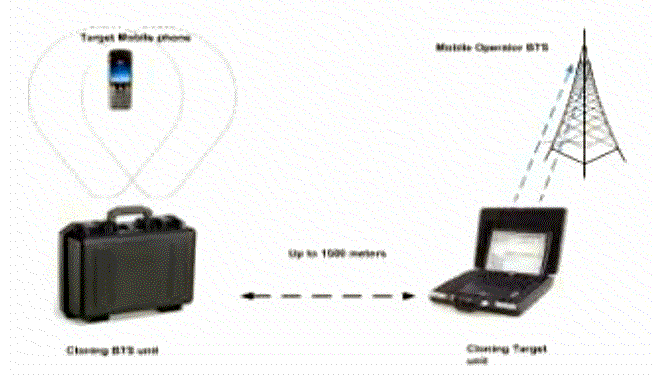
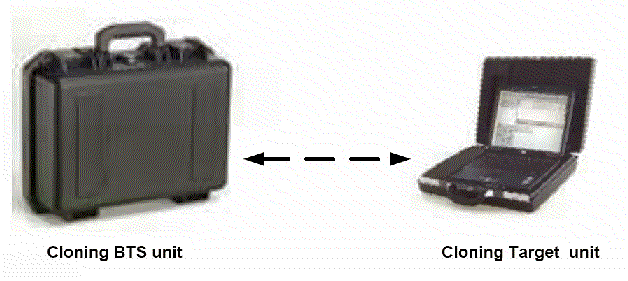
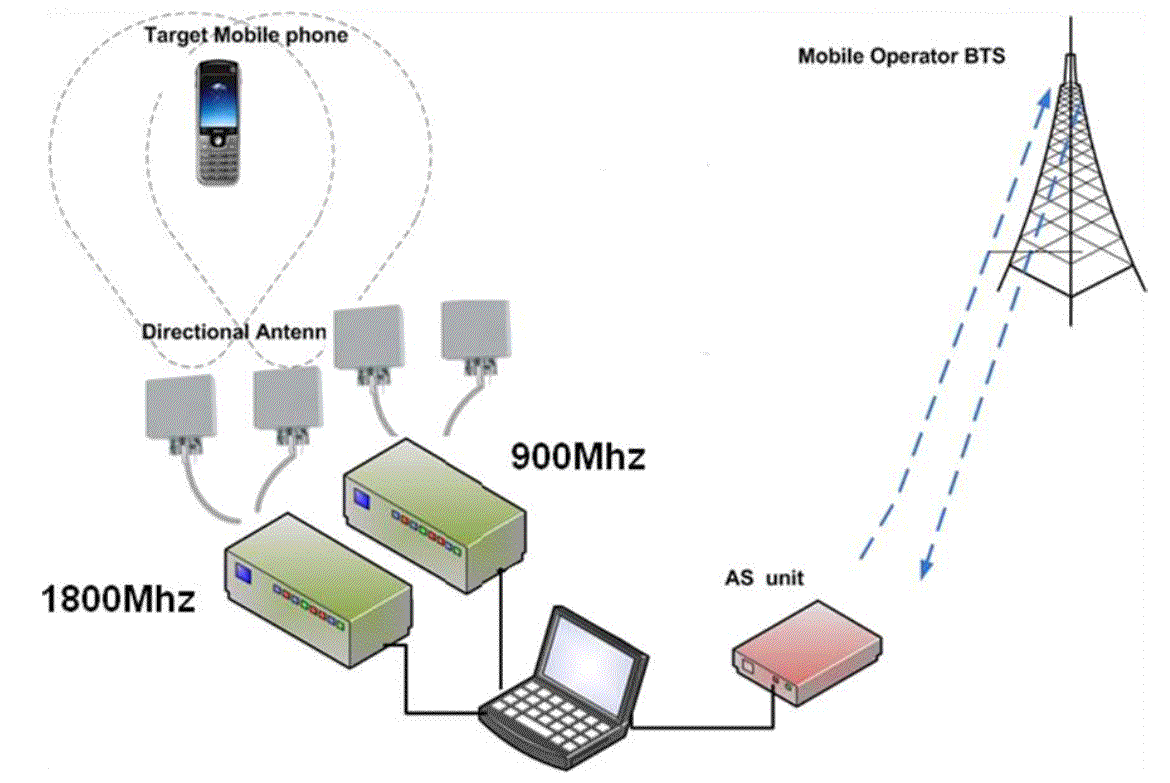
BTS cloning system includes: o A base station (BTS), tuned to one of the GSM-900 or GSM-1800 frequency bands (with preliminary agreement);
o A base station transmitting channel amplifier o Two (or more) channels of mobile stations for Kc calculation. o Internal Directional antennas
o A complete set of up to 6 active stations. o A paging channel station 1 or 2 units;
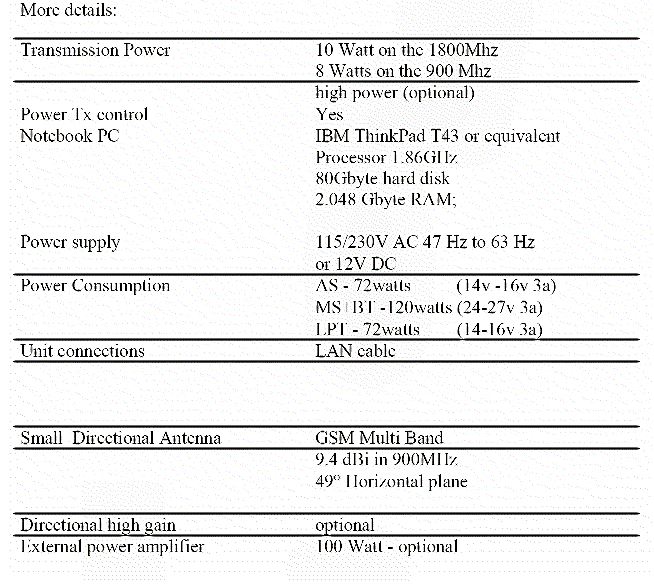
o IBM ThinkPad T60 or better o Processor 1.86GHz o 80Gbyte hard disk o 2.048 Gbyte RAM;
A set of connection cables.
o High gain High power antennas o Long distance amplifiers units
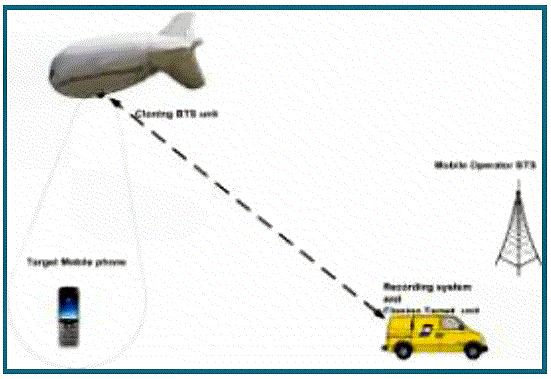
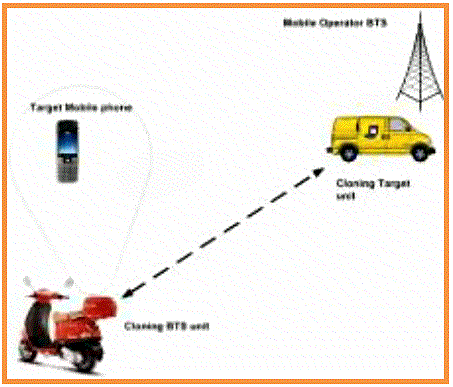
Operational Scenarios with wireless system Increase the range The range of the system is defined between the system and the target. The range is between 150 meters in town to 1km in rural areas and up to 2km with long distance option. With wireless option the range will be defined by the sum of the distance between the target and the battery operate BTS cloning and the distance between the cloning BTS to the recording system – the Laptop. So the range may be increase to 600 meters in town to much more even 15 km in LOS (Line Of Sight).
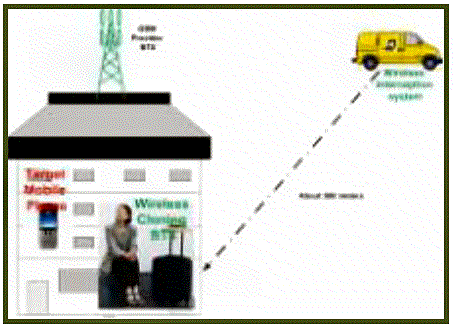
Penetrate to buildings: With the
wireless option we can make interception Inside
buildings while the recording system will be in a van
out of the building. Penetrate to difficult areas
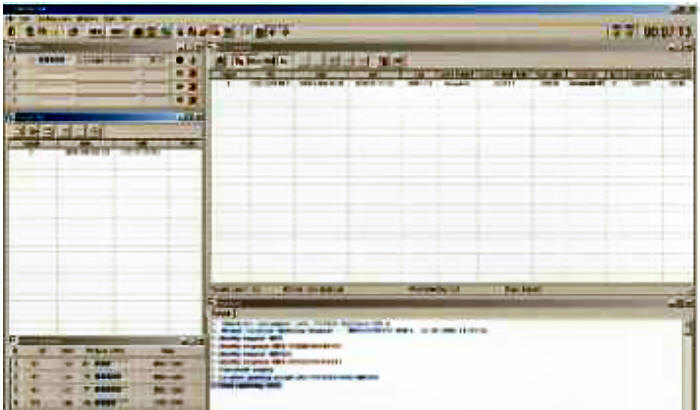
GUI The
system Graphic User Interface
(GUI) is composed of main window and some sub programs
that enables the process of the information that was
captured during the interception process: The main
windows enable the full and easy control of the field
interception mission. It provides an easy setup of the
system parameters and a full automatic capture and
presentation of the communication protocols of the
subscribers. The
system main windows: The main
window presents the status of the 4 channels receivers
and voice recorders. Via the main
windows the system operator manages the target list
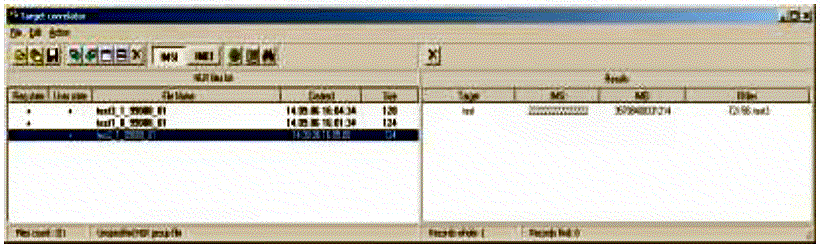
parameters and controls the modes of operations. The target
correlation window enables to isolate the target IMSI/IMEI
parameters by correlating of subscribers lists with or
without the target presence. The targets correlation
window enables also to detect the replacing of SIM cards
in mobile handsets by correlating the IMSI and IMEI
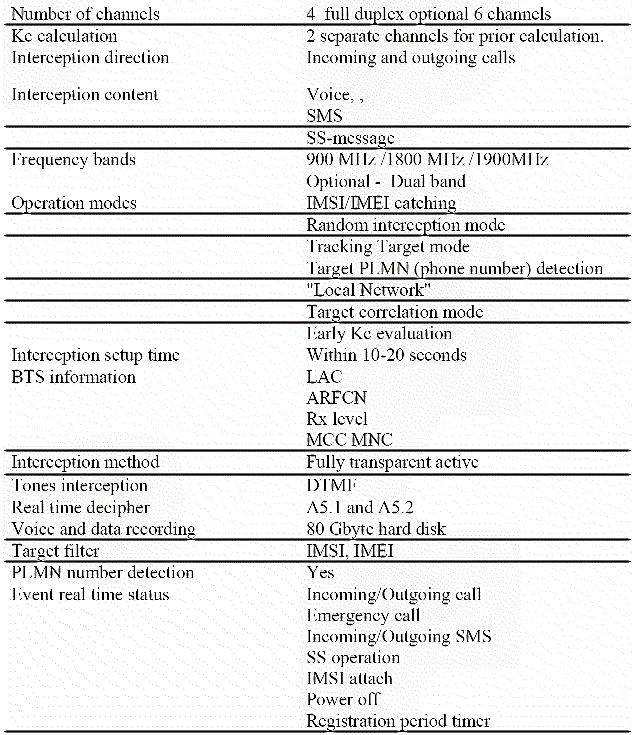
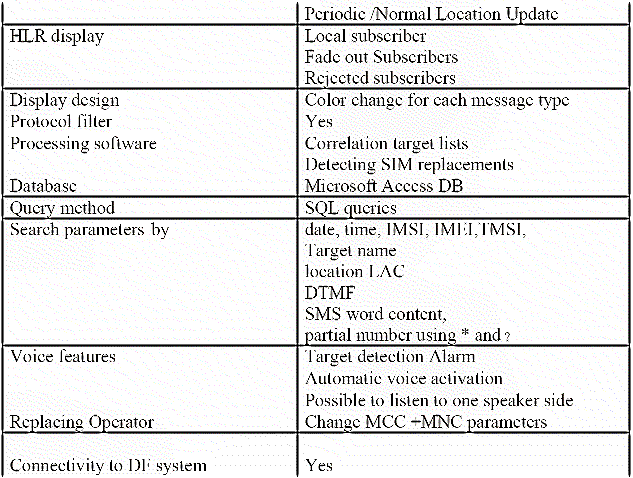
data. Specifications
Vehicle DF
option: The
system DF adds both a direction
finding and a tracking vehicle GPS location capability
to existing system basic GSM
phone interception systems. The whole system fits into a
single case and can be deployed on any vehicle in less
than ten minutes. Extremes of
performance of mobile tracking have always required
sophisticated equipment and highly skilled operators.
The system DF offers
simplicity of deployment and use whilst maintaining the
range and sensitivity of more complex and expensive
equipment. The system DF has
been designed to offer the simplest dual band GSM
cellular phone location solution available on the market
today. Features Installed
and ready to use in under ten minutes Single
page controller display shows all tracking information Audible
tone varies according to range for ease of use Digital
signal processing removes need for operator fine tuning
and improves sensitivity Data
interface allows the GPS position of the tracking
vehicle and the direction to the target to be displayed
by Director mapping software. Suitable
for mobile deployment & operation Audible
tone changes to indicate GSM lock. The
system DF add-on option
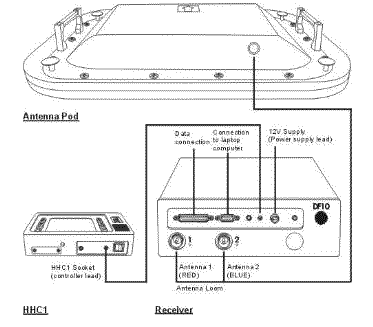
comprises three major components: Antenna
pod Receiver Hand held
controller The Antenna Pod The antenna
pod receives the incoming signal and is connected by two
screened cables to the receiver. If the system is
deployed on a car the pod is fixed to the roof by
magnets and/or roof straps to each corner. The use of
roof straps is recommended under all conditions. The Receiver The receiver
detects the cell phone signals, automatically
synchronizes to the GSM signal and calculates the
bearing to the selected phone. Tracking data is
displayed on the hand held display (HHC1) which is also
used to select the optimum average period. The Hand Held
Controller HHC1
displays the signal bearing on a polar display with a
resolution of +/- 1 degree. The signal strength is
displayed on a bar graph and the signal quality is
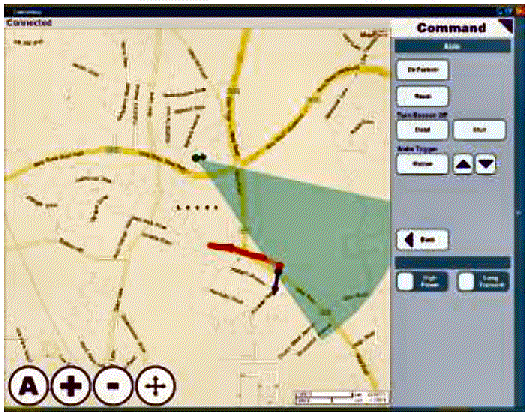
indicated by the length of the direction pointer. GPS Mapping Vehicle
based mapping application design with large buttons for
optional touch screen use. It displays the local and the
target position with DF cone when available. It also
enables easy interface with Google earth maps and
images. Operation The method
of operation is based on two vehicles. First vehicle
with the interception system that forces the target
phone to send continues signal transmission. The second
vehicle is deployed with the DF components. The
direction to target is displayed as a compass pointer
and the relative signal strength is shown as a bar graph
and numerically. The audio tone increases in frequency
as Dominator DF gets closer to the target giving a clear
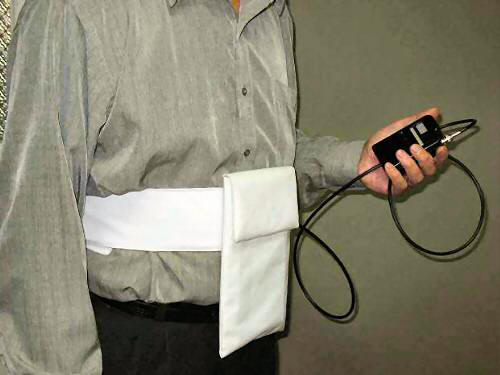
warning of a close encounter. Homing Device Indoor
direction finder Small and
light weight Support
GSM900, DCS1800 and PCS1900 Rechargeable
batteries Sound indication |
Suite
case N° 1 |
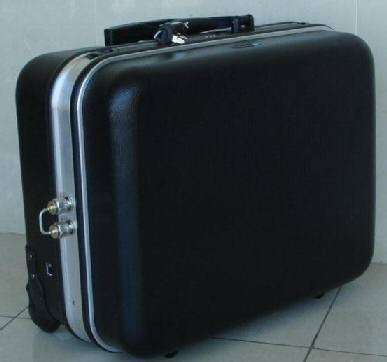
Suite
case N° 2 |
|
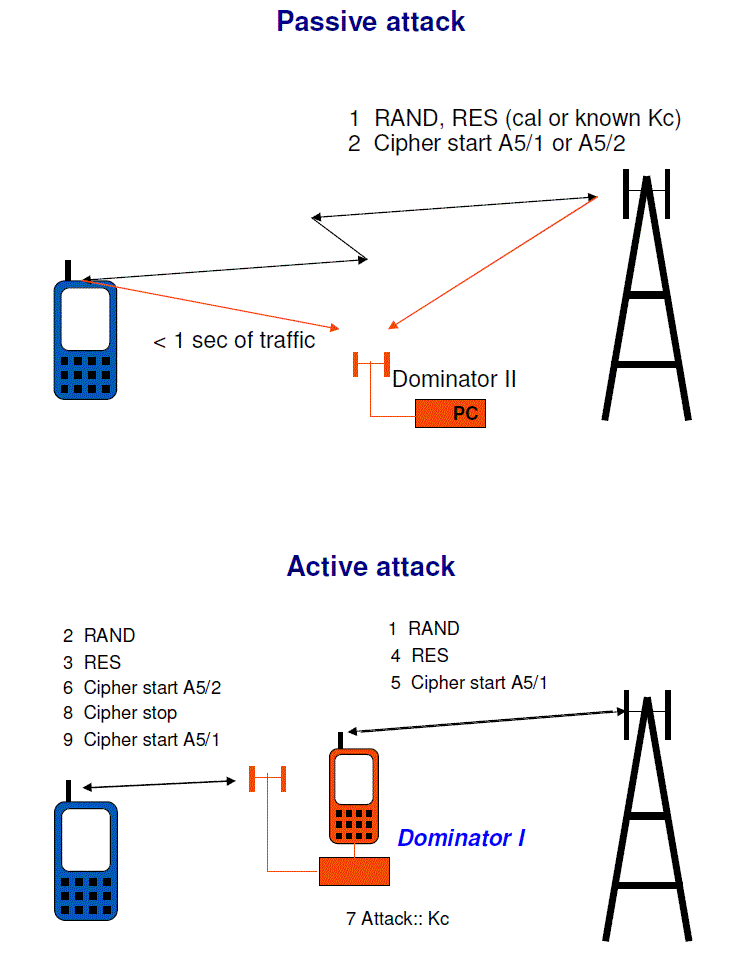
GSM Interception methods Active vs. Passive Advantages and Disadvantages of passive system: Many clients are asking for passive because they do not want that the interception mission will be detected by the targets. The client assumes that the fact that the system transmit signal to the air may cause the detection by the target. Yes, this 'non transmission' is the benefit of the passive method but this is the only benefit of these systems. The passive method cause many difficulties and disadvantages. More facts about A5.1 passive interception systems: 1. There are no fully passive real time interception systems for A5.1 today2. System are detecting the key after minutes3. All the passive and semi passive system are losing the first conversation4. If Kc (encryption key) is changing every call the systems can't totally work. There are many GSM operators that change the Kc every call.5. It can work in larger distances but receive only one side of the conversation6. For good interception, the system should be very close to the target. Bad reception gives high BERR (bit error rate) that eliminate the possibility to detect the key.7. The interception and recording of many calls stopped in the middle.8. The rate of capturing a call is depending on the number ofchannels (4+4, 8+8, 16+16,,,,) that the system has relative to thenumber of channels in the area. 9. Detection of targets is based on Temporary identification numbers – TMSI. It always nee to be detected and updated.10. The system collects information only if the target is using the cell phone(talking or SMS)11. The systems are much much more expensive than active.
Advantages and Disadvantages of active system: The Dominator I is the only non detectable active system in the world. Here are some of the characteristics of the modern active system: 1. Yes it is active and transmit signal to the air2. It provides real time interception in all the operators and all the working modes!!!!3. Collect intelligence information when the targets are not using the cell phone4. It captures IMSI and IMEI in the target area.5. Interception filtering is by SIM identification or equipment identification6. Since it is active the quality of target voice as well as other party voice is absolute.7. It provides benefits like target correlation, target phone number detection, easy operation, almost absolute rate of success.8. Much easy to detect the targets. Easy to detect if target is replacing SIM or Equipment.9. Distance is affected by other base stations. Standard distance is up to 1Km.
Differences Summary: • Probability of interception o GSM network uses frequency hopping and changing channels (frequencies) in the middle of a call. The GSM also uses TDMA which many calls can use the same BTS channel. Because of those factors there is a probability of reception, that means there is a chance that conversation will be captured by the system. For that the more channels the system has the better chance to capture conversations. o The Active system capture 100% of the calls • Quality of voice o In the passive system the quality of voice is a factor of quality of reception. You may listen and record a noisy conversation because the reception of the mobile unit is very low. Sometimes you can hear only the Base Station and not the mobile handset o In active system that works as a relay the quality of voice is superior • Intelligence gathering o In passive systems you capture only targets that are talking o In active system you can gather information about a target even if he is not making conversation • Detecting a target o In passive system you detect a target by TMSI ( temporary number that changes every few hours) o In active system you may find the target by IMSI which is a fix number even before he makes a call. • Target phone number o Passive system can't find the number o Active system you can find the number of the target |
Specification and photos are not contractual and are subject to verification upon inspection
TAKE NOTICE!
PLEASE BE ADVISED THAT INFORMATION INCLUDED IS CONFIDENTIAL IN NATURE AND IS BASED ON PRE-EXISTING BUSINESS RELATIONSHIP WITH THE LEGAL OWNER OF PROPERTY DESCRIBED HEREIN (IF APPLICABLE). AS SUCH, UPON RECEIPT OF SAID INFORMATION THE RECEIVER ACKNOWLEDGES THAT ANY UNAUTHORIZED CONTACT WITH SAID LEGAL SELLER WILL BE CHARACTERIZED AS A BREACH OF CONFIDENTIALITY AND SAID AGREEMENT MAY BE ENFORCED UNDER EXISTING LAW OR IN EQUITY.
This paper was
prepared by General Equipment Inc.
The paper represents an offer of a partner of General Equipment Inc.
All rights are reserved by and for General Equipment Inc.
All
content and ideas of this paper are the property of General Equipment Inc.
Defense items are subject to final destination approval and granting of an
export license issued by exporting country's authorities